
Polished concrete can be a durable and attractive floor finish, but it needs to be considered before the slab is designed and poured.
Once concrete becomes the finished floor, things that would normally be hidden beneath tiles, carpet or timber become visible.
That includes cracks, joints, colour variations, aggregate distribution and imperfections in the concrete surface.
If you want polished concrete, tell the structural engineer, concrete supplier and concreter before the slab is designed and constructed.
Concrete Cracks
The first thing to understand is that concrete can crack.
Concrete changes volume as it dries and responds to temperature, moisture and loading. Reinforcement, joints and good construction practice can help control where cracking occurs and how cracks behave, but they do not guarantee a completely crack-free slab.
That matters much more with polished concrete because the concrete itself is the finished surface.
A crack beneath carpet may never be noticed. The same crack in a polished floor can become a permanent visual feature.
Decide on Polished Concrete Before the Structural Design
If polished concrete is intended, it should be identified during the design stage rather than after the slab drawings have been completed.
The engineer can then consider the finished appearance when determining matters such as:
- slab configuration;
- reinforcement;
- joint locations;
- changes in slab geometry;
- openings and penetrations;
- restraint within the slab;
- thickness and support conditions; and
- areas where cracking may be more likely.
The structural requirements still come first, but knowing that the slab will remain exposed allows appearance and crack control to be considered as part of the overall design.
Keep Slab Geometry as Simple as Practical
Large slabs with corners, narrow sections, penetrations and frequent changes in direction can develop concentrations of stress as the concrete shrinks.
Simple slab panels and sensible joint locations can make cracking easier to control.
This does not mean every polished slab needs to be broken into small rectangles, but architectural layout and structural behaviour should be considered together.
Joints Matter
Joints are one of the most important parts of concrete slab crack control.
Depending on the slab, there may be construction joints, control joints or isolation joints associated with walls, columns and other structural elements.
With a polished floor, those joints also become part of the visual appearance of the finished room.
Architects, designers, engineers and concreters should therefore coordinate joint locations before the slab is poured rather than attempting to hide them afterwards.
Reinforcement Helps Control Cracking
Reinforcement does not prevent concrete from shrinking.
Its role includes controlling the behaviour and distribution of cracking and providing the structural capacity required by the slab design.
The appropriate reinforcement depends on the particular slab, spans, support conditions, loads, geometry and footing system.
Simply adding more mesh is not a substitute for proper slab design.
Reinforcement Position Is Important
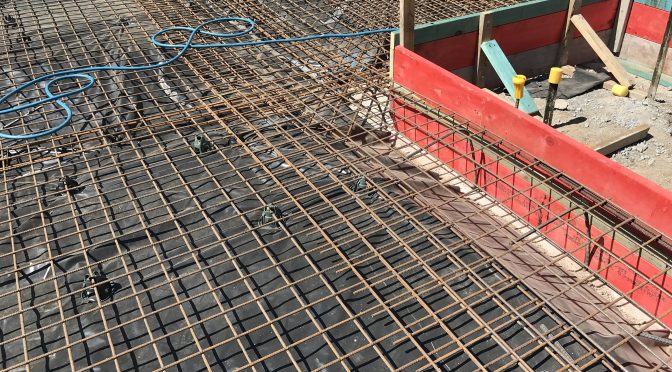
Reinforcement only performs as intended if it is positioned correctly during construction.
Mesh and bars need suitable support so they remain at the level shown on the engineering drawings while the concrete is placed.
Reinforcement that ends up lying on the ground or significantly displaced from its intended position may not provide the crack-control or structural performance assumed by the designer.
Concrete Mix Selection Matters
The concrete mix needs to satisfy both the structural requirements and the requirements of the intended finish.
Strength is only one consideration.
Aggregate selection, workability, shrinkage characteristics, admixtures, colour and the polishing process can all affect the finished result.
The engineer, concrete supplier and polishing contractor should understand what finish is intended before the pour.
Concrete Placement and Compaction Matter
Good concrete design can still produce a poor finished slab if the concrete is not placed properly.
Concrete needs to be adequately consolidated without segregation or excessive disturbance of the aggregate.
This becomes especially important where the slab will later be ground or honed because variations in aggregate distribution may become visible in the finished surface.
Curing Is Critical
Concrete needs suitable curing after it is placed.
Rapid moisture loss while concrete is young can contribute to shrinkage cracking and poor surface performance.
The curing method should suit the concrete specification and the proposed polishing system.
This should be coordinated with the concrete supplier, concreter and polishing contractor because some curing compounds or surface treatments may affect later grinding, colouring or polishing.
Understand What Finish You Are Buying
“Polished concrete” can describe several different finishes.
The finished appearance may depend on how deeply the surface is ground, how much aggregate is exposed, whether pigments or stains are used and what final treatment is applied.
Before construction, obtain samples or examples from the proposed concrete and polishing contractors so everyone understands the intended finish.
Crack Repair in Polished Concrete Is Difficult to Hide
Once a polished floor cracks, repairing the crack structurally may be possible.
Making the repair invisible is much harder.
Repair materials can differ in colour, texture and reflectivity from the surrounding concrete. In some cases, trying to disguise a crack can make it more noticeable.
This is why realistic expectations before construction are important.
A Crack Is Not Automatically a Structural Problem
If a polished concrete floor develops cracking, the appearance of the crack does not by itself tell you whether the slab has a structural problem.
An assessment may need to consider:
- crack width and pattern;
- whether the crack is changing;
- vertical displacement across the crack;
- floor levels;
- slab and footing construction;
- site drainage;
- soil movement;
- reinforcement details;
- construction joints; and
- the history of the damage.
A visually disappointing crack and a structurally significant crack are not necessarily the same thing.
Investigating Cracks in an Existing Polished Concrete Floor
If cracking is increasing, associated with floor movement or appearing throughout an existing building, it can be worth investigating the cause before attempting cosmetic repairs.
Possible contributing factors can include concrete shrinkage, restraint, foundation movement, drainage problems, plumbing leaks, construction details or a combination of factors.
The appropriate repair depends on what caused the cracking in the first place.
Concerned About Cracking in a Concrete Floor?
Cornell Engineers investigates selected cases involving cracked concrete slabs, floor movement, foundation performance and structural damage.
If you have an existing polished concrete floor that is cracking or moving, send us the property address, photographs, relevant drawings and a brief history of when the cracking was first noticed.
We can review the information and advise whether a structural engineering investigation is likely to assist.